La domanda merita una risposta vera
Se puoi parlare a 150 parole al minuto e l'IA può pulire la tua dettatura in tempo reale, perché spendere otto settimane a imparare a digitare a 70 PPM?
È una domanda legittima. Non retorica. La tecnologia è reale, il vantaggio di velocità è reale, e liquidarla con "digitare sarà sempre importante" è pigro.
Quindi pensiamoci correttamente.
Cosa fa bene la dettatura
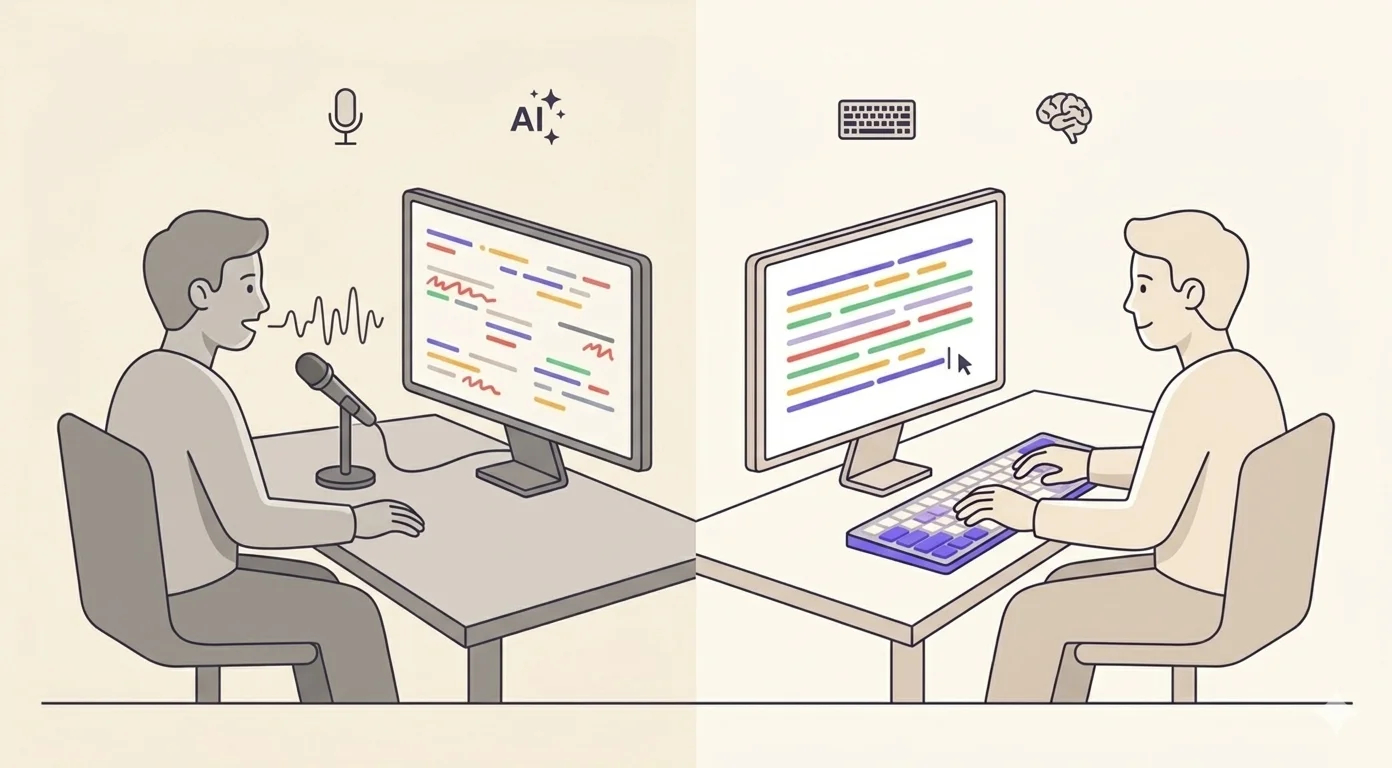
Il riconoscimento vocale moderno è davvero impressionante, e vale la pena leggere il quadro completo dettatura contro digitazione nel 2026 prima di schierarsi. Strumenti come Whisper, Superwhisper e la dettatura integrata nell'OS hanno colmato la maggior parte del divario di accuratezza che rendeva l'input vocale frustrante cinque anni fa. Puoi dettare un'email di 500 parole in quattro minuti, far sistemare grammatica e tono all'IA e inviarla. Quel flusso di lavoro è reale e funziona.
Per i contenuti lunghi, articoli, report, prime bozze di qualsiasi cosa, la dettatura ha un vantaggio di velocità legittimo. Parlare è più veloce che scrivere per quasi tutti. Se la tua produzione principale è prosa non strutturata e ti trovi in uno spazio privato dove parlare ad alta voce è pratico, i flussi di lavoro vocali hanno senso.
Ci sono anche casi di accessibilità dove la dettatura non è solo comoda, è essenziale. Per chi ha disabilità motorie, lesioni da sforzo ripetuto o condizioni che rendono doloroso l'uso della tastiera, l'input vocale è un miglioramento significativo della qualità della vita.
Niente di tutto ciò è sbagliato. Se la dettatura funziona bene per il tuo flusso di lavoro, usala.
Ma ecco cosa la dettatura non può fare
Richiede condizioni audio che la digitazione non richiede.
Non puoi dettare in un ufficio open-space senza disturbare i colleghi. Non puoi dettare durante una chiamata. Non in una biblioteca, una riunione, uno scompartimento tranquillo di un treno o in uno dei decine di contesti dove le tastiere funzionano silenziosamente e i microfoni no.
L'input vocale è un'attività privata. La digitazione non lo è. Questo conta più di quanto ammettano quelli che teorizzano in astratto la sostituzione delle tastiere.
Non è più veloce per l'input strutturato.
Compilare un modulo, scrivere codice, inserire dati, rispondere ai messaggi Slack, digitare un comando nel terminale, muoversi in un foglio di calcolo — nessuna di queste attività beneficia della dettatura. Nel momento in cui il tuo output smette di essere prosa fluente e diventa strutturato, preciso o interattivo, l'input vocale diventa più lento, non più veloce.
Prova a dettare una query SQL. O un file JSON. O una riga di Python. L'attrito è immediato, ed è per questo che la velocità di digitazione conta ancora per i programmatori.
L'IA non rimuove la tastiera dal flusso di lavoro — la sposta.
Questa è la parte che viene persa più spesso. L'ascesa degli strumenti IA non ha ridotto l'uso della tastiera per la maggior parte dei professionisti. Ha cambiato il carattere di quell'uso.
Dove prima scrivevi un documento completo, ora scrivi un prompt. Dove prima componevi un'email da zero, ora scrivi le istruzioni perché la scriva l'IA, e poi correggi il risultato. La tastiera è ancora lì — la usi semplicemente in modo diverso. E la precisione e la velocità con cui la usi contano ancora.
Il prompt engineering è fondamentalmente un'abilità di scrittura. Le persone che ottengono di più dagli strumenti IA sono, sistematicamente, quelle che sanno articolare le proprie esigenze in testo, in modo chiaro e rapido. La velocità e la precisione di digitazione incidono direttamente sulla fluidità con cui riescono a farlo.
Non puoi dettare i tuoi pensieri.
Questo punto è più sottile, ma più importante.
Parlare e scrivere coinvolgono il cervello in modo diverso. Quando digiti, tendi a pensare in frasi — modifichi mentre procedi, strutturi mentre procedi. L'atto di digitare è una forma di pensiero. Molti scrittori raccontano di non riuscire a capire cosa pensano di un argomento finché non lo hanno scritto.
La dettatura cattura il parlato. Il parlato è più frammentato, più ripetitivo, più associativo del testo ben formato. L'IA può ripulire la grammatica, ma non può ricostruire il pensiero che non è avvenuto, perché hai delegato la struttura alla voce.
Per le email di servizio non cambia niente. Per tutto ciò che richiede pensiero preciso, analisi, strategia, codice, documentazione tecnica, cambia parecchio.
Il vero argomento per la digitazione nel 2026
Non si tratta di dire che la dettatura è cattiva. Si tratta del fatto che le tastiere non sono scomparse da nessuna parte, e le persone che le usano bene hanno ancora un vantaggio costante.
Considera cosa può fare un digitatore veloce e preciso che un digitatore lento o un utente vocale non può:
- Rispondere a un messaggio in quindici secondi senza interrompere il focus o il contesto
- Navigare in una codebase, modificare un file di configurazione ed eseguire un comando di terminale in un unico movimento fluido
- Comporre un prompt preciso e modificato per uno strumento IA in trenta secondi invece di tre minuti di pulizia della dettatura
- Lavorare in qualsiasi ambiente, a qualsiasi livello di rumore, senza disturbi
Non sono vantaggi ipotetici. Si presentano ogni giorno nel lavoro di chi usa il computer sul serio.
L'argomento è anche attuariale, e le ore che chi digita lentamente perde ogni anno lo rendono concreto. Il lavoratore della conoscenza medio trascorre da quattro a sei ore al giorno usando una tastiera. A 40 PPM, questa è una porzione significativa del tempo speso ad aspettare le mani. A 70 PPM, non lo è. E quel divario si accumula negli anni.
La risposta onesta
La dettatura sostituirà la digitazione per alcuni flussi di lavoro, per alcune persone, in alcuni contesti. Sta già accadendo e continuerà.
Ma la tastiera non scompare. È l'interfaccia principale per l'input preciso, strutturato e flessibile nel contesto — e lo rimarrà a lungo, perché i casi d'uso che serve sono fondamentalmente diversi da quelli che la voce gestisce bene.
Imparare a digitare bene nel 2026 non è una scommessa contro il futuro. È un investimento in un'abilità che ha accumulato valore negli ultimi quarant'anni e non dà alcun segno di diventare obsoleta.
La domanda non è "digitazione o dettatura". È "quale strumento per quale lavoro". E la tastiera vince ancora più lavori di qualsiasi altro metodo di input, con un margine ampio.
Se decidi che la tastiera vale due mesi della tua attenzione, Typiq è un tutor desktop che gira completamente offline, non richiede account e costa 22,99 € una tantum: nessun abbonamento legato a una competenza che userai per decenni. C'è una prova gratuita prima di pagare.
Domande frequenti
L'IA sostituirà completamente la digitazione nei prossimi 10 anni? È improbabile. L'IA è stata prevista per sostituire le tastiere da quando il riconoscimento vocale è diventato praticabile negli anni '90. La tecnologia è migliorata drasticamente e l'uso della tastiera è aumentato insieme a essa.
La dettatura è più veloce della digitazione? Per l'output di prosa pura in un ambiente privato, sì. Per l'input strutturato, il codice, i moduli e qualsiasi cosa interattiva, la tastiera è più veloce.
I bambini dovrebbero ancora imparare a digitare se gli strumenti IA migliorano? Sì. I bambini che entreranno nel mercato del lavoro tra 10-15 anni utilizzeranno le tastiere come interfaccia primaria durante tutta la loro carriera.
Posso usare l'IA per migliorare la mia digitazione? Non direttamente. La digitazione è un'abilità motoria che si sviluppa attraverso la pratica fisica deliberata. Non esiste una scorciatoia per la memoria muscolare.
Qual è il miglior caso d'uso per la dettatura in un contesto di lavoro della conoscenza? Le prime bozze di prosa lunga in un ambiente privato. Per tutto il resto — email, codice, documenti strutturati, lavoro interattivo — la tastiera rimane lo strumento più pratico.