Você provavelmente é mais lento do que pensa
O funcionário de escritório médio digita cerca de 38-40 palavras por minuto. Parece razoável até você fazer as contas.
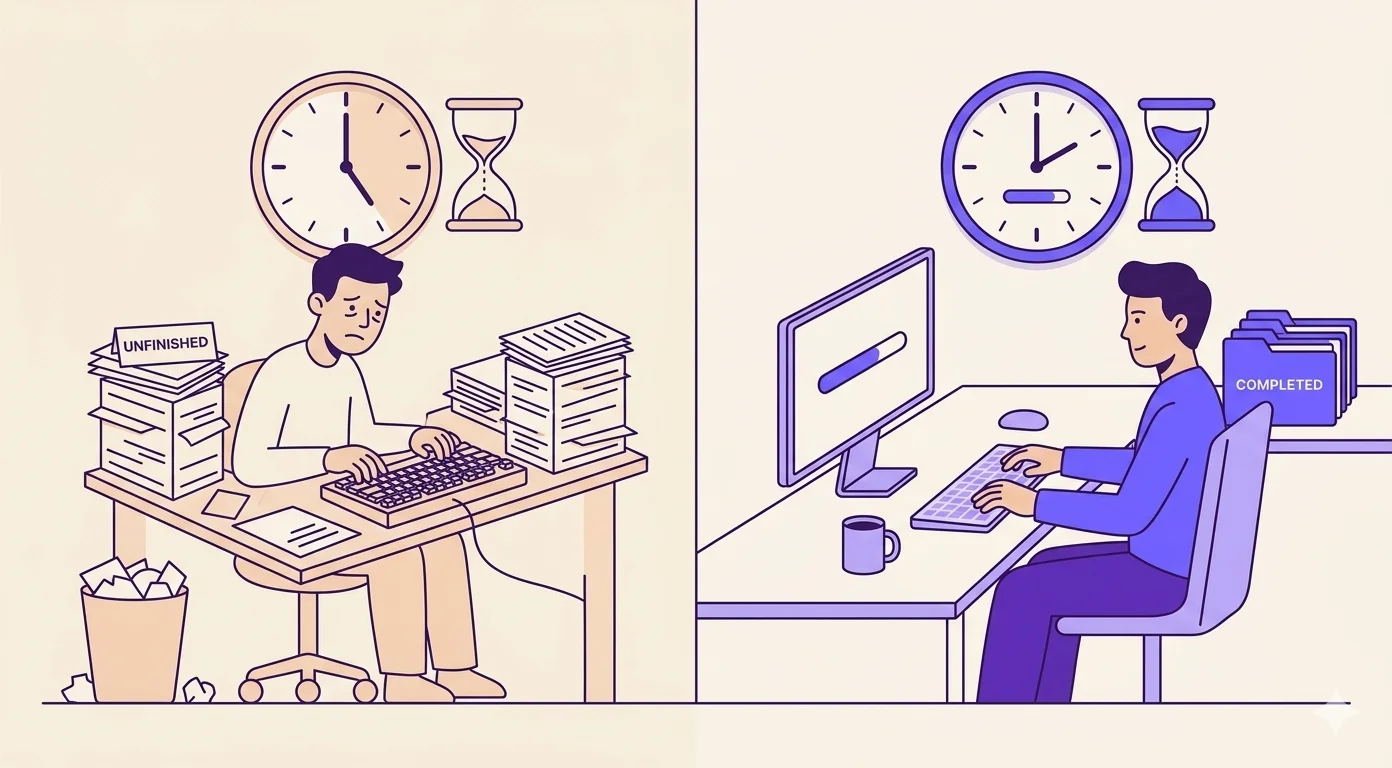
Se você escreve 2.000 palavras por dia — e-mails, relatórios, mensagens no Slack, documentos — a 40 PPM isso são 50 minutos de digitação pura. A 80 PPM são 25 minutos. São 25 minutos recuperados, todos os dias.
Ao longo de um ano, essa diferença soma aproximadamente 108 horas. Quatro dias e meio inteiros, perdidos porque os seus dedos não conseguem acompanhar o seu cérebro.
O gargalo não é o seu cérebro
Eis o que ninguém conta para você sobre digitar devagar: não é só perda de tempo. Quebra o seu raciocínio.
Quando você digita devagar, o seu cérebro tem que esperar as mãos. Você perde o fio do que estava escrevendo. Volta atrás. Relê a última frase para lembrar onde estava. Essa interrupção constante destrói o estado de flow que produz o seu melhor trabalho.
Os digitadores rápidos não digitam apenas mais rápido. Pensam com mais clareza na tela, porque não há atraso entre o pensamento e o texto.
Os números por trás da velocidade de digitação
Vamos analisar isso para diferentes funções.
Um desenvolvedor de software digita aproximadamente 4.000-6.000 palavras por dia entre código, comentários, pull requests, documentação e Slack, e é por isso que a velocidade de digitação para programadores merece um tratamento à parte. A 40 PPM são cerca de 2 horas de digitação. A 80 PPM é uma hora.
Um professor preparando planos de aula, feedback e e-mails pode digitar 1.500 palavras por dia. A diferença entre 35 PPM e 70 PPM economiza 20 minutos diários.
Um estudante escrevendo redações, anotações e mensagens atinge facilmente 2.500 palavras por dia na época de provas. Digitar mais rápido significa mais tempo pensando nas respostas e menos tempo transcrevendo.
Esses números não são dramáticos isoladamente. Mas some tudo ao longo de semanas, meses, semestres. Acumula rápido.
Velocidade sem precisão é inútil
Há uma armadilha comum: as pessoas tentam digitar rápido e acabam cometendo mais erros. Depois passam tempo corrigindo esses erros, e o ganho líquido é zero ou negativo.
É por isso que o PPM bruto não é a métrica certa. O que importa é o PPM líquido — a sua velocidade depois de subtrair os erros. Alguém digitando a 60 PPM com 98% de precisão é mais produtivo do que alguém martelando a 80 PPM com 89% de precisão.
A precisão vem primeiro, e vale entender o equilíbrio entre precisão e velocidade bruta antes de começar a empurrar os seus números. A velocidade segue naturalmente assim que os seus dedos souberem para onde ir sem pensar.
O que é uma "boa" velocidade de digitação?
Depende do que você faz, e de onde você está em relação à velocidade média de digitação por faixa etária, mas aqui estão metas práticas:
- 30-40 PPM: Médio. Dá para se virar, mas você está deixando tempo na mesa.
- 50-60 PPM: Sólido. Digitar já não atrasa você para a maioria das tarefas.
- 70-80 PPM: Rápido. Você consegue digitar tão rápido quanto a maioria das pessoas pensa. Escrever parece fluido.
- 90-100+ PPM: Profissional. Você é mais rápido do que 95% das pessoas. Digitar é invisível — não interfere em nada.
A maioria das pessoas consegue atingir 60-70 PPM com algumas semanas de prática concentrada. Você não precisa ser um demônio da velocidade a 120 PPM. Só precisa ser rápido o suficiente para que digitar deixe de ser um gargalo.
Hunt-and-peck vs digitação com todos os dedos
Se você ainda olha para o teclado enquanto digita, está fazendo hunt-and-peck. Mesmo que seja razoavelmente bom nisso, está se limitando a cerca de 40-50 PPM com um teto rígido.
A digitação com todos os dedos — os dez dedos no teclado e os olhos na tela — remove completamente esse teto, e a comparação completa dos dois métodos explica por que esse teto existe. A diferença não é apenas velocidade. É também postura (você não dobra o pescoço para olhar para baixo), precisão (os olhos pegam os erros imediatamente) e multitarefa (você pode digitar enquanto lê material de consulta na tela).
Mudar de hunt-and-peck para a digitação com todos os dedos é desconfortável nas primeiras duas semanas. A velocidade cai antes de subir. Mas em um mês, a maioria das pessoas iguala a velocidade antiga. Em dois meses, já ultrapassou e não olha mais para trás.
Velocidade de digitação e crescimento profissional
Este é mais difícil de medir, mas é real.
As pessoas que digitam rápido se comunicam mais rápido. Respondem e-mails mais rapidamente, produzem documentos mais cedo e contribuem mais nas discussões escritas. No trabalho remoto — onde a comunicação escrita é tudo — isso se acumula em uma vantagem profissional real.
Ninguém vai promover você porque digita a 80 PPM. Mas a pessoa que entrega consistentemente mais rápido, escreve com mais profundidade e se comunica com mais fluidez? Essa pessoa é notada. E grande parte dessa fluidez vem do fato de digitar não ser um obstáculo.
Como ficar mais rápido de verdade
Comprar um teclado caro não ajuda. Nem "apenas digitar mais". Digitar mais, com técnica ruim, só reforça maus hábitos.
O que funciona:
Aprenda a posição correta dos dedos. Cada dedo tem teclas atribuídas. Assim que os seus músculos aprenderem essas posições, a velocidade vem por si só.
Pratique em sessões curtas diárias. 15-20 minutos por dia superam uma sessão de 2 horas uma vez por semana. A consistência constrói a memória muscular.
Concentre-se primeiro na precisão. Vá mais devagar até atingir 95%+ de precisão. Depois aumente gradualmente a velocidade. A abordagem oposta — ir rápido e corrigir erros — cria hábitos dolorosos de desaprender.
Use um programa estruturado. O Typiq, por exemplo, começa pela fileira base e adiciona teclas progressivamente. Cada lição se baseia na anterior. Os testes de digitação aleatórios não ensinam técnica — apenas a medem.
Pare de olhar para o teclado. Este é o hábito mais difícil de quebrar, e o mais importante. Cubra as mãos com uma toalha se necessário. Em uma semana, o seu cérebro se adapta.
O verdadeiro custo de não melhorar
Aqui está um experimento mental. Você vai passar os próximos 30 anos usando um teclado, quase todos os dias. A 40 PPM, vai passar aproximadamente 3.240 horas apenas digitando nesse período. A 80 PPM são 1.620 horas.
São 1.620 horas — 67 dias inteiros — que você poderia ter recuperado. Para trabalhar, pensar, terminar mais cedo e fechar o notebook.
A velocidade de digitação é uma dessas habilidades discretas. Não aparece em um currículo. Ninguém se gaba dela no jantar. Mas afeta tudo o que você faz no computador, todos os dias, pelo resto da sua vida profissional.
Vinte minutos de prática diária durante dois meses. Esse é o investimento. O retorno dura décadas.
Vinte minutos por dia rendem mais quando algo os estrutura. O Typiq é um tutor de digitação para computador em Mac, Windows e Linux: funciona totalmente offline, não pede conta e custa 22,99 € uma única vez em vez de uma mensalidade. Experimente primeiro de graça e veja se a estrutura funciona para você.